
Complaints Procedure for House Clearance Notting Hill
Purpose: This document sets out the formal complaints procedure for customers of House Clearance Notting Hill and related rubbish removal services in the service area. It explains how a customer may raise concerns about the conduct, safety, billing, or environmental handling of waste, and describes the stages, expected timeframes and possible remedies. The aim is to resolve issues promptly, transparently and fairly while maintaining professional standards across our waste clearance operations.This complaints policy applies to all enquiries related to Notting Hill house clearance, including domestic and light commercial clearances. It is intended to be clear and accessible: if you have a concern, raise it at the earliest opportunity. Where appropriate, complaints will be handled in line with applicable waste management and consumer protection practices. Informal resolution is encouraged first; many concerns are resolved quickly through direct communication with operational staff or the office team.
 Scope and definitions: The procedure covers service performance, missed collections, damage to property, disposal methods, unexpected charges, and staff conduct. It excludes matters that are part of ongoing legal proceedings or third-party disputes beyond the control of the removal crew. Key definitions used in this document are: customer (the person requesting the clearance), contractor (the operator performing the clearance), and complaint (an expression of dissatisfaction requiring a response). The following steps outline the standard approach to handling complaints for rubbish removal and waste clearance services.
Stage 1 - Informal complaint: Initially, customers should raise concerns with the crew or site representative at the time of the service, or with the administration team as soon as possible afterwards. Simple clarifications, such as scope of work or invoice items, may be addressed on the spot. Most issues are resolved at this stage. If an informal approach does not provide a satisfactory outcome, the customer may proceed to a formal complaint.
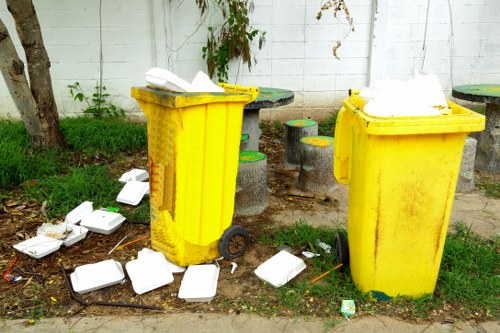 Stage 2 - Formal complaint submission: To begin the formal process, the complainant should provide a clear statement of the issue, including the date of service, description of the problem, relevant invoice or job number (if known), and any supporting evidence such as photographs. While contact details should not be published here, complainants must supply sufficient information for the investigation. A formal complaint will be acknowledged within three working days and allocated to an investigator.
Investigation and timeframe: The appointed investigator will review the facts, interview relevant staff, and assess records including job sheets and disposal receipts. The objective is to complete the investigation within 15 working days of acknowledgement. If more time is needed due to complexity, the complainant will receive an interim update explaining the reasons and providing a revised completion date. Throughout the investigation, confidentiality and data protection principles will be maintained.

Outcomes and remedies
Possible outcomes include: no action (if the complaint is unfounded), remedial work at no extra cost, partial or full refund, an agreed goodwill gesture, or staff retraining where procedural errors are identified. The decision will be communicated in writing and will include reasons for the outcome and any corrective actions. Where a health, safety or environmental breach is confirmed, immediate steps will be taken to mitigate harm and prevent recurrence.Appeal and escalation: If the complainant is not satisfied with the outcome, they may request an internal review by a senior manager. The request for escalation must be made within 14 days of receipt of the decision and should state the grounds for appeal. The internal review will be undertaken by a person not involved in the original decision and will normally be completed within 20 working days. The appeal decision will be final within the organisation's internal process.
Record keeping and continuous improvement
All complaints, investigations, decisions and corrective actions will be recorded and retained in accordance with standard records management and data protection practices. Aggregate complaint data will be reviewed periodically to identify trends and inform training, operational changes, and policy updates that improve service delivery for house clearance, rubbish removal and waste clearance operations. Transparency and accountability are central to this approach. Confidentiality and impartiality: Complaints will be handled impartially, and personal data will be processed only to the extent necessary to investigate and resolve the issue. Wherever possible, investigations aim to protect the privacy of both customers and staff. Records of complaints are used for internal improvement rather than public disclosure, except where legal or regulatory obligations require otherwise. Fairness and procedural consistency underpin all decisions.
Support and reasonable adjustments: Customers who need assistance in making a complaint, or who require reasonable adjustments because of disability or other needs, will be given appropriate support during the process. This may include help to prepare statements or acceptance of alternate formats for evidence. The procedure is intended to be inclusive and accessible.
Final note: This complaints procedure aims to provide a clear, consistent and prompt method for resolving issues related to rubbish removal Notting Hill, waste clearance Notting Hill, and associated house clearance services. The emphasis is on early resolution, fair investigation and practical remedies where appropriate. Customers are encouraged to use this process so that concerns can be addressed and services improved for all.